A VERY SPECIAL ANNOUNCEMENT!
|
![]() The Parkinson's Recovery Project is a non-profit organization dedicated to disseminating information about the cause and treatment of Parkinson's disease using the theories and treatment modalities of Oriental medicine. A new explanation for the underlying causes of Parkinson's disease has arisen through our research. These explanations are based on Asian medicine’s ancient channel theory and on basic, well-known rules of human physiology. Using the diagnostic techniques of channel theory, it is easily observed that people with both idiopathic Parkinson’s and psychogenic (emotionally-induced) parkinsonism manifest a rare, highly specific channel-flow pattern. (A “channel” might be described in part as one of the many electrical currents in the subcutaneous fascia. These currents run directly below the skin. They can be detected easily by a trained hand.) A severe foot injury, one that interrupts the normal flow of electricity in one of the channels on the foot, can cause the body to slide into a modified dissociative mode. In slightly different fashion, a life-threatening or pre-death injury causes a multiple-channel shift in electrical systems that then triggers, to varying degrees, the dissociative mode. In the dissociative mode, blood is shunted away from the skin and the extremities. Heart rate is profoundly slowed. Breathing rate is profoundly slowed. Digestion comes to a halt. The body is flooded with endorphins, which inhibit sensations of pain. To continue reading please click here Important new chapter posted on 08/18/09 CLICK HERE to downloadImportant Notice:The Parkinson's Recovery Project is a non-profit research program, established in 1998. A for-profit business, knowing full well of our work, selected a name misleadingly similar to ours: Parkinson's Recovery *Program*. We wish to make it utterly clear that our work is in no way associated with their for-profit business. Our research work is oriented towards understanding the cause and effective treatments for Parkinson's disease. Our publications, always available for free, share our findings.
|
Since 1998, our organization has sponsored several Parkinson’s related projects: small research projects in which people with Parkinson’s have been treated for free; low-cost or free classes and/or private instruction in the techniques that we use for treating people with Parkinson’s disease; free publications (via this website), free technical support for health practitioners via email. In the past, we offered a free clinic under the auspices of Five Branches Institute, an acupuncture college in Santa Cruz, California, which treated people with Parkinson’s disease.
Our newest, upcoming project, still in the planning stage, will be a research collaboration with the HeartMath Institute: we will use heart and brain-wave coherence monitors developed by the HeartMath institute to assess the validity of our hypotheses regarding the heart dissociation that we’ve observed in people with Parkinson’s disease. A subsequent project will determine whether or not the biofeedback monitors can help people with Parkinson’s learn to undo the heart dissociation, which, in turn, usually allows healing of the injury that causes the electrical disarray that we’ve found in people with Parkinson’s disease: an electrical disarray which, according to Asian medicine’s channel theory, should cause symptoms that match, exactly, the symptoms of Parkinson’s disease – including a reversible dormancy of dopamine-producing cells.
If these research ideas sound bizarre, and unrelated to the dead-dopamine-cell hypothesis, an aging hypothesis which Parkinson’s researchers admit does not explain all the symptoms of Parkinson’s disease, please read the results of our previous research, described in detail in the free book, Blink of an Eye: Recovery from Parkinson’ Disease. The book is available on the Publications page of this website. Click here to go to the Publications page.
Many people with Parkinson’s disease who have been in our program have experienced symptoms consistent with recovery from Parkinson’s. Some no longer have any symptoms of Parkinson’s – and remain symptom-free without further treatment. We feel that our program may hold an important key to the effective treatment of Parkinson's disease. While it may take more than twenty years (the norm for paradigm-shifting research) before our findings even begin to be accepted by the greater medical community, we feel that this information may be significant and therefore wish to make it available to the general public.
We are incorporated in the state of California. Our non-profit status has been approved by the United States I.R.S (Internal Revenue Service). Our board of directors includes doctoral level and master’s level acupuncturists.
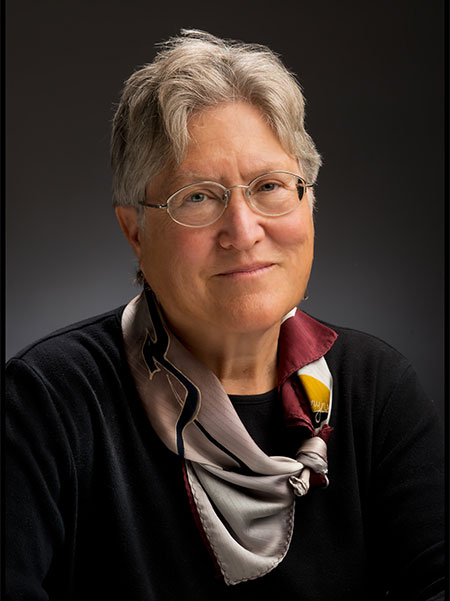
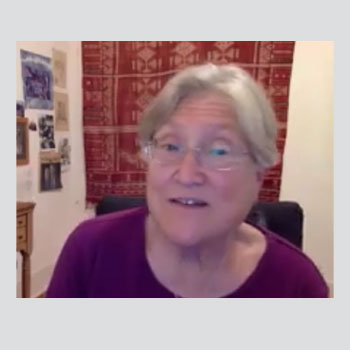
The project leader is Dr. Janice Walton-Hadlock, DAOM (Doctor of Acupuncture and Oriental Medicine), a teacher at Five Branches University of Traditional Chinese Medicine in Santa Cruz, California.
Her writings, describing various aspects of our research in this field, have been published as articles in numerous peer-reviewed acupuncture journals. Her larger works, a book about the theory, cause, and treatment of Parkinson's and a book about antiparkinson's medications, are published by the Parkinson's Recovery Project and are available on this website.
Her entry into publication in western medical journals is very recent; her rebuttal to a New England Journal of Medicine (NEJM) 2004 article on antiparkinson's medication, based on her four-year study of antiparkinson's medications, was published in the March 31, 2005 issue of the NEJM.
Other research team members are Chris Ells, LAc, (doctoral degree pending), Rebecca Weinfeld, LAc, RN, MTCM (Master’s degree in Traditional Chinese Medicine and Laura Walter, LAc., MTCM.
Chris Ells teaches at Five Branches University of Traditional Chinese Medicine. Rebecca Weinfeld, in addition to being a licensed acupuncturist, craniosacral therapist, and nutritional consultant, has many years of experience as a psychiatric nurse. Laura Walter is a craniosacral therapist, as well as a licensed acupuncturist. All four members of the research team have been working extensively with people with Parkinson’s since the late 1990s.
As of August, 2008, a completely overhauled edition of Trouble Afoot: Tracking down the Causes and Cures of Parkinson’s Disease, was posted on this website. This edition replaced the previously titled “Recovery From Parkinson’s Disease. The book is nearly completed. Those chapters that are finished are available for free download from this website. This book includes the theory, treatment techniques, and treatment plan that we use in successfully treating Parkinson's disease. (As an aside, the title originally used in 2008 was Almost Icarus. That new title for the book previously published as was discarded when it became apparent that very few people were familiar with the Greek myth of Icarus or its metaphoric references.) Click here to go to Trouble Afoot: Tracking down the Causes and Cures of Parkinson's Disease.
The Medications of Parkinson's Disease – or – Once Upon A Pill, is the result of four years of research on the various medications of Parkinson's disease and explains how the medications work, how they are supposed to be prescribed (they are rarely prescribed correctly), what happens to people who are taking anti-parkinson's medications if they begin to recover, and our reasons for our recent (2003) decision to not work with anyone who has ever taken anti-parkinson's medications for longer than three weeks. Click here to learn more about this decision. This medications book also has a tremendous amount of material about Parkinson's disease that we learned as a result of observing the changes that occurred in medicated patients during their recovery. Many unmedicated PDers have said that they learned as much about Parkinson's disease from reading the medication book as they did from reading the Recovery from Parkinson's. The various roles of dopamine in regulating attitude, mood, movement, temperature regulation, social stress, illness, and more, is addressed in this book on medication. In general, western style physiology and chemistry of Parkinson's is addressed in the Medication book, and Asian theory about treating channel disorders is in the Practitioner's Handbook. Together, these two books provide an in depth look at the western and Asian understandings of Parkinson's, and the chemical and energetic processes that contribute to this syndrome. Click here to go to The Medications of Parkinson’s – or – Once Upon a Pill.
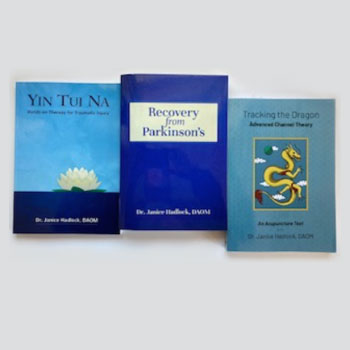
Tracking the Dragon, a textbook of advanced channel theory.
Excerpts from this book are downloadable, here, for free. We are pleased to make available the chapters of this book that address the subjects of learning how to feel channel Qi, maps of the acupoints and the channels, and an introduction that explains just what “channel Qi” is.
Introduction- Click this link to download
Tracking the Dragon- Chapter One- Click this link to download
Tracking the Dragon- Appendix- Click this link to download
“I can’t find a health practitioner who can feel what the channels are doing!” This is the most common reason that people with Parkinson’s give for wanting to come to our clinic in Santa Cruz.
The other written materials presented on this website explain, in great detail, what a person needs to do to recover from Parkinson’s disease. There are two steps. Step one: getting rid of the mental tendency towards dissociation. This is very much a do-it-yourself project. No one can help a person with Parkinson’s change his own mental posture. He must do it himself. Step two: the supportive holding, FSR treatment, of the unhealed injury. Anyone – a spouse, a friend, a neighbor – can learn how to do FSR. Full instructions are included in the material on this site.
FSR treatment may require months worth of sessions, lasting anywhere from twenty minutes to an hour. It is impractical to come to our clinic to receive this care – it is best done in the comfort of one’s home town.
But many people with Parkinson’s feel they must visit our clinic, because they want to know what their channel Qi is doing.
Therefore, we are posting on this site, for free download, the pertinent chapters for learning to feel the flow of channel Qi. The chapters come from an acupuncture text on advanced channel theory. This site offers, at no cost, the book’s introduction, the first chapter of the book (the chapter that teaches everything one needs to know to feel channel Qi), and the appendix, which includes maps of all the channels, and maps of all the acupuncture points.
(The rest of the book provides information about channel Qi diagnostics, the channel Qi patterns in the various autonomic states (parasympathetic, sympathetic, dissociative, and sleep), and instructions on acupuncture needling from a channel Qi perspective – information not necessary for a person who only wants to recover from Parkinson’s disease.)
Hopefully, with this additional information, recovery from Parkinson’s disease can be, to an even greater degree, a do-it-yourself outpatient project.
For those who do wish to buy the whole book, it is available directly from the publishers: fastpencil.com. Be aware that this text is a print-on-demand (POD) book: a bone fide book that is professionally printed and bound one copy at a time, when ordered. This new kind of publishing prevents the inherent waste of traditional, mega-copy printing jobs, thus saving paper and money. However, up to a week can be required to get your book produced.
This link takes you to the page where you can order the book:
http://www.fastpencil.com/publications/1487-Tracking-the-Dragon
Thank you so much for considering making a donation to the Parkinson's Recovery Project.
Your contributions help cover our costs so that we can continue to make our research available for free download. Donations also help pay for the in-house expenses involved in running the Parkinson's Recovery Project.
We hope that you have found our research helpful. If you wish to make a contribution so that others in future may also discover our research or download the free books, we are deeply grateful for your support.
The Parkinson's Recovery Project is a non-profit organization incorporated in California. Donations to the Parkinson's Recovery Project are tax-deductible.
Credit Card Donation
To make a donation using a credit card or PayPal, please click on the donate button.
You will receive an emailed receipt for your taxes.
Donation by check
If you prefer to make a donation via regular mail, our mailing address is:
Parkinson's Recovery Project
343 Soquel Ave, Box 413
Santa Cruz, CA 95062
Please make checks payable to Parkinson's Recovery Project. You will be mailed a receipt for your taxes.
Memorial Program
We gratefully accept donations in honor or memory of loved ones.
If you wish to make a donation to honor someone, you may include the following information with your donation: the name of the honoree, and the name and address of a third party that you would like notified. A card will be sent to the third party stating that you have made a donation in the honoree's name.
If you make a memorial donation using a credit card (see above), you may send us the name of the honoree and the name and address of the person to be notified via the following email address: pdinfo@cruzio.com. In your memorial email that has the name and mailing address of person being remembered, please also include your own name or the email address you used to make the donation, so that we can link the memorial request email with the correct donor.
Questions |
There are no guarantees. The rate of recovery, in our limited experience, has been highly variable. In part, this may be because many of our patients Parkinson’s who have a high degree of dissociation, which provides physical and emotional insulation from pain, have been extremely reluctant to practice the exercises that will enable themselves to feel internal physical sensation. In order to recover, they must learn to feel safe while allowing themselves to feel some of the physical and emotional pains that they have put on hold for, in some cases, a lifetime – including the pain or fear associated with the foot injury. However, those Parkinson’s patients who have taken the plunge into re-association, in many cases, via very gentle treatments rendered to the unhealed foot injury, have been able to recover from Parkinson’s disease. Also, some people with Parkinson’s have only a very small level of dissociation. Those people recover quite quickly, once the foot injury heals. The rate of recovery, and whether or not a person can recover, has much more to do with his emotional insulation from pain than it has to do with the severity of his foot injury.
In those patients who are able to easily attain and stay in parasympathetic mode (one of several automatic, neurological modes that regulate heart rate, breathing, and organ function), mere healing of the foot injury seems to allow the symptoms of Parkinson’s to cease.
But in those patients who cannot easily attain or stay in parasympathetic (relaxed) mode and/or whose symptoms are highly variable from one hour to the next or one day to the next, being particularly worse when they feel anxiety or fear, we have seen fear of the unknown inhibiting their ability to feel the expansions and contractions of their own chest area in response to positive and negative thoughts and experiences. We have seen a straight-line relationship between the willingness, on the part of the patients, to practice the exercises that restore heart wave and brain-wave coherence (also known as the parasympathetic state, or “calm” state – as opposed to the sympathetic mode’s fight,flight, or freeze state) and the ease and speed of recovery from Parkinson’s disease.
While it may seem strange to a person who does not have Parkinson’s that a person might choose Parkinson’s rather than change his anxiety-based thought patterns or overcome his dissociation from his own heart or his physical and emotional pains, this judgment is not fair. Only a person with Parkinson’s can decide whether or not his difficulties associated with Parkinson’s are more painful than the traumas that might be felt keenly if he chooses to re-associate with his emotions and/or injured body parts.
This question is impossible to answer without patient evaluation, but several factors appear to play a part in determining speed of recovery: age, severity of symptoms, number of blockages, correct diagnosis, and attitude.
This is the most frequently asked question. It is impossible to answer. Every person is unique and may or may not respond to treatment in a manner similar to the average.
However, some trends and generalizations are possible. It appears that the following factors can be of significance:
1. correct diagnosis
2. age
3. severity of symptoms
4. number of blockages
5. attitude
Phone
We have discontinued the phone number. We did maintain a phone line for several years for the benefit of those people who were not adept at using the computer. As internet access has improved over the last five years, and phone inquiries are down to about one per week, we are ending the telephone line answering service. If you simply must talk to someone in person about this program, you might try contacting someone in an Internet chat group.
As noted elsewhere, technical questions about the techniques can be answered by email at PDteam@cruzio.com. If you do not have access to email, there is a mailing address, but your questions will be answered much more slowly, simply because traditional mail takes more time and tends to get shoved to the back of the work load.
Office
Our mailing address, 343 Soquel Ave, #413, Santa Cruz, CA, 95062, is only a mail box, it is not the address of an office. The mailroom employees do not know the addresses of the private residences or offices of members of the Parkinson's Recovery Project. The Parkinson's Recovery Project is an internet project - we do not maintain an office. Janice Walton-Hadlock's private medical practice is not open to drop-in visitors, nor are any of the private practices of any of the PD Team of Santa Cruz members. Please do not show up at the personal residences or offices of any members of the Parkinson's Recovery Project demanding treatment or "just hoping to talk." The police will be called.
More Information
Please refer to our Frequently Asked Questions page for more information.